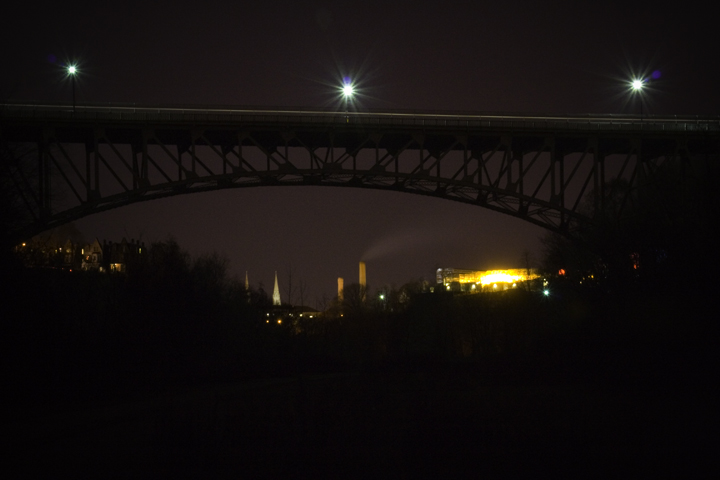
There must have been hundreds of them
white rounded triangular shapes
bobbing in the placidity
gulls,
too far west or too far south
bringing shore beauty to the waters of
the Monongahela.
They seemed nonchalant
towards the landlocked songbirds
chirping stronger than a meager lilt –
a willful effort
to crack the stubborn frost
that stays this asphalt twice hardened
by March, the lioness.
They seemed to know
with sunrise
not quite present
that the thin air would later give way
that day
to softening sun
and malleable soil.
the naked and limbless snag
thrust silently
towards the old growth canopy silhouette
this terrestrial puncture wound
ceased growing the day
my grandmother began to lavish smiles
and yet the tree stood
the blighted chestnut
twisted and pale
a giant's horn
called upon the pale gray autumn sky
to bring the wet wind
to remove us from its company
death had long since been paid
its worth in unbounded rest
and yet the tree stood
shroud in patches of lichen
and patterned in scrawls
from countless lovestruck
and heedless
layered so thickly
the names and doting
heartshaped lines
were themselves
a wind worn woven bark
I stood there
left arm outstretched to touch
cool
hard
smooth
with countenance cast to
where there once were branches
knowing how all trees will fall
but at a pace
we have long forgotten
to understand
"She had dead-calm, unblinking eyes––suggesting the steely recklessness of a car thief. If you dared her to do it–or bet her five bucks that she couldn't––she would drive foot-to-the-floor through every red light on Wilshire Boulevard, all the way from Santa Monica into Beverly Hills. Unless she got broadsided in Brentwood, or shot by a cop in Westwood Village, there'd be no stopping her––her bare left arm would be lolling out the window, giving everyone the finger the whole way."
- John Irving
Until I Find You
"The world is a civilized one, its inhabitant is not: he does not see the civilization of the world around him, but he uses it as if it were a natural force… In the depths of this soul he is unaware of the artificial, almost incredible, character of civilization, and does not extend his enthusiasm for the instruments to the principles which made them possible."
– José Ortega y Gasset
The Revolt of the Masses